Open banking has now moved from the fringes into the mainstream. Pay by Bank has become the alternative payment method at the checkout, and consented bank data has become the primary route for modern financial services to get an accurate view of their customers' finances.
More than 16 million people and businesses in the UK now use open banking, and monthly payments passed 40 million for the first time in May 2026. As the market has matured, growth has increased steadily. With the question of whether open banking works largely settled, attention is turning to what businesses can build with it.
AI agents are already researching and making purchases on people's behalf, using financial data to make decisions. Gartner estimates three billion B2B internet-connected machines can act as customers today, which will grow to eight billion by 2030. Agents are emerging as core users of financial data and payments, and are on track to become primary consumers of both.
At the same time, people and businesses expect payments and financial products to fit around them while they stay in control of their money, from a utility bill collected for the amount actually used to a lending decision based on their current position. Meeting that takes more than a one-off payment or a single account snapshot, which is why open banking payments and data are both evolving.
At Yapily, we are building for this future, so businesses can put both capabilities to work for their customers, both directly and through the agents they appoint on their behalf. That is why we have changed how we describe what we do to programmable payments and financial insights, built on open banking. This article explains why we are making that change. In short, three shifts are coming together at the same time, and we expect them to make this direction work:
Connectivity has matured. Bank coverage and conversion are levelling among established providers, so the value is moving to what businesses build on top of open banking.
Agents are starting to pay. As AI agents move from recommending purchases to completing them, they need consent they can act within and an accurate picture of someone's finances to decide from.
Open finance is on the way. With the FCA's roadmap now set out to 2030, consent-based sharing will extend beyond the current account and widen what both capabilities can do.
The evolution of open banking's core capabilities
Open banking gave businesses two building blocks: payment initiation, which moves money directly between bank accounts, and account information, which lets a customer share their bank data with a business they choose. Programmable payments are where payment initiation goes next, and financial insights are where account information goes next.
What are programmable payments?
Programmable payments let you move money under rules set in advance, with explicit consent. Instead of authorising each payment as it happens, the customer agrees the rules once: how much can be paid, how often, to whom, and for how long. Those rules sit in a mandate, and each payment that falls within them can go ahead without the customer having to authorise it again.
Programmable payments can be triggered by a signal or event so that a payment might be made when income lands, when a balance falls below a threshold, or when an invoice is approved. The business, or the service acting for the customer, watches for the trigger and initiates the payment, while the mandate sets the limits it has to stay within. Many of those triggers come from the customer's own bank data.
AI agents are one of the main reasons this matters now. People are open to using them but want to stay in control of their money. In a YouGov survey for ACI Worldwide in June 2026, 43% of UK adults said they would trust AI to follow spending limits, while 70% said purchases made without asking would affect their willingness to use an AI shopping agent. For agentic payments to work, customers need to know that an agent can only spend within limits they have set and can withdraw.
Within open banking, commercial variable recurring payments (cVRP) are the foundation for programmable payments, and they give customers the level of control they want. A cVRP mandate works like this:
The customer agrees on the maximum for each payment, the maximum over a period, and how long the mandate lasts.
They authenticate once, in their banking app.
The business initiates each payment when it is due, and the customer's bank checks it against those limits and confirms funds before any money moves.
The customer can revoke the mandate at any time.
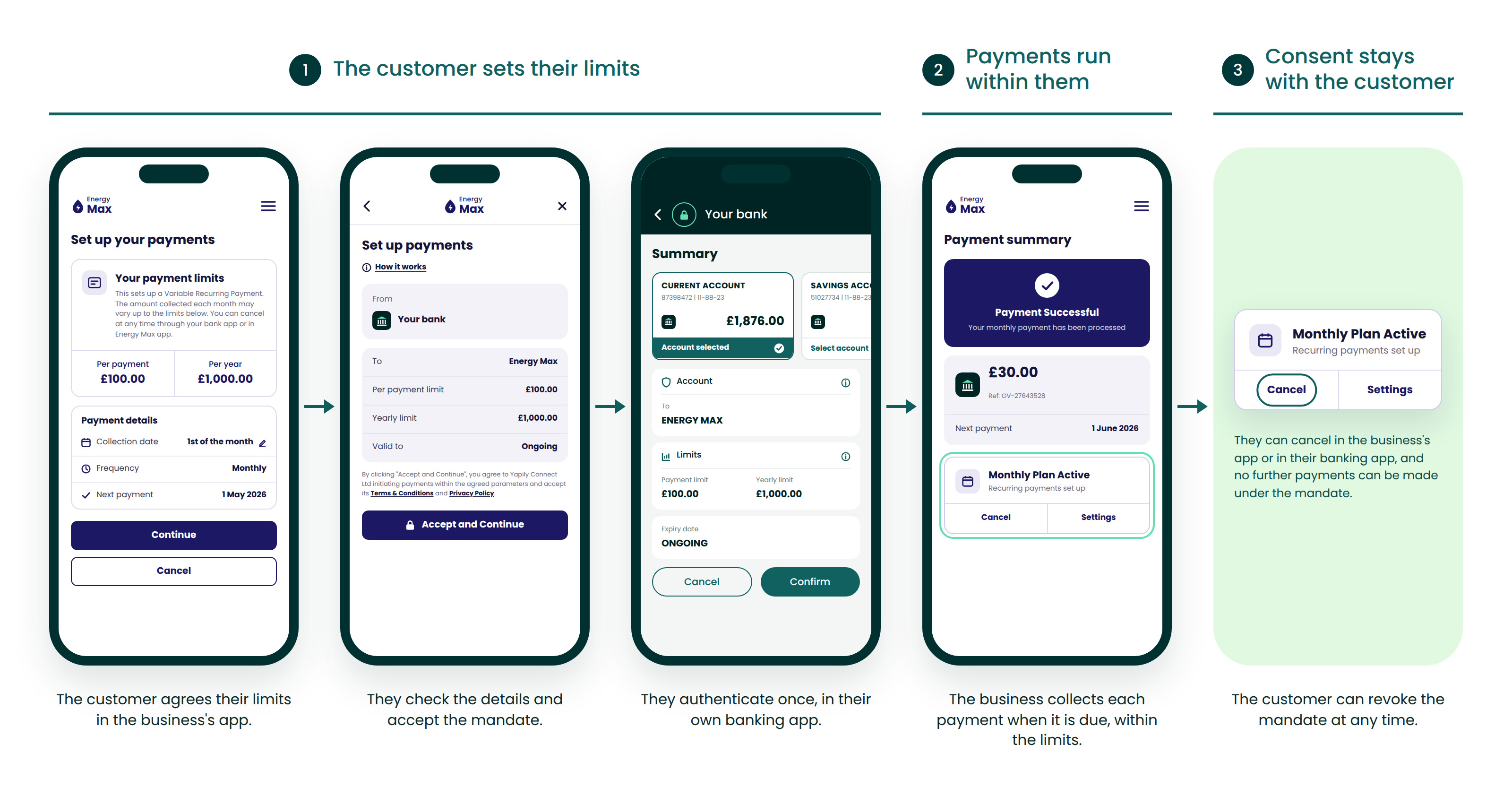 Figure 1: An example illustration of cVRP mandate, from setting the limits to revoking consent.
That structure already suits variable bills, regular investment contributions, and loan repayments, and will support subscriptions and one-click payments in e-commerce in the near future. It also gives an agent a way to act for a customer while the rules stay with the customer.
Security is an integral part of cVRP's design, and it is what gives customers the confidence to let agents pay on their behalf:
Strong customer authentication (SCA) happens at the bank when the mandate is created.
The limits are enforced by the customer's own bank.
No card details change hands.
Open banking's track record supports this: OBL's Payments & Fraud Monitor found that open banking payments had less than half the fraud rate of the wider UK payments industry in 2025, and VRPs had lower fraud rates than single immediate payments (SIPs).
cVRP has been live since 2 June 2026, in the UK only, for Wave 1 sectors including regulated financial services, utilities, government, and charities. The FCA plans to consult on a long-term framework for open banking by the end of 2026, which it describes as the foundation for expanding cVRP into e-commerce.
Agent-initiated payments are still at an early stage. A mandate today covers a single merchant, and the next milestone is to enable consent that lets an agent transact across several merchants within limits the customer sets. For an early example of what this could look like, read how Yugo built an agentic booking prototype using open banking.
What are financial insights?
Financial insights are consented bank data that has been categorised and enriched into signals a business can make decisions on, such as income, affordability, risk, and identity. They build on account information, the part of open banking that lets a customer share their bank data with a business they choose, and they turn that data into something a business can act on.
A bank transaction arrives as a merchant string and an amount, which on its own says very little. The categorisation and enrichment layer then:
Identifies the merchant and assigns the transaction to a category.
Separates income from spending.
Picks out recurring commitments such as rent, subscriptions, and loan repayments.
Surfaces risk indicators, from overdraft use to failed payments and arrears.
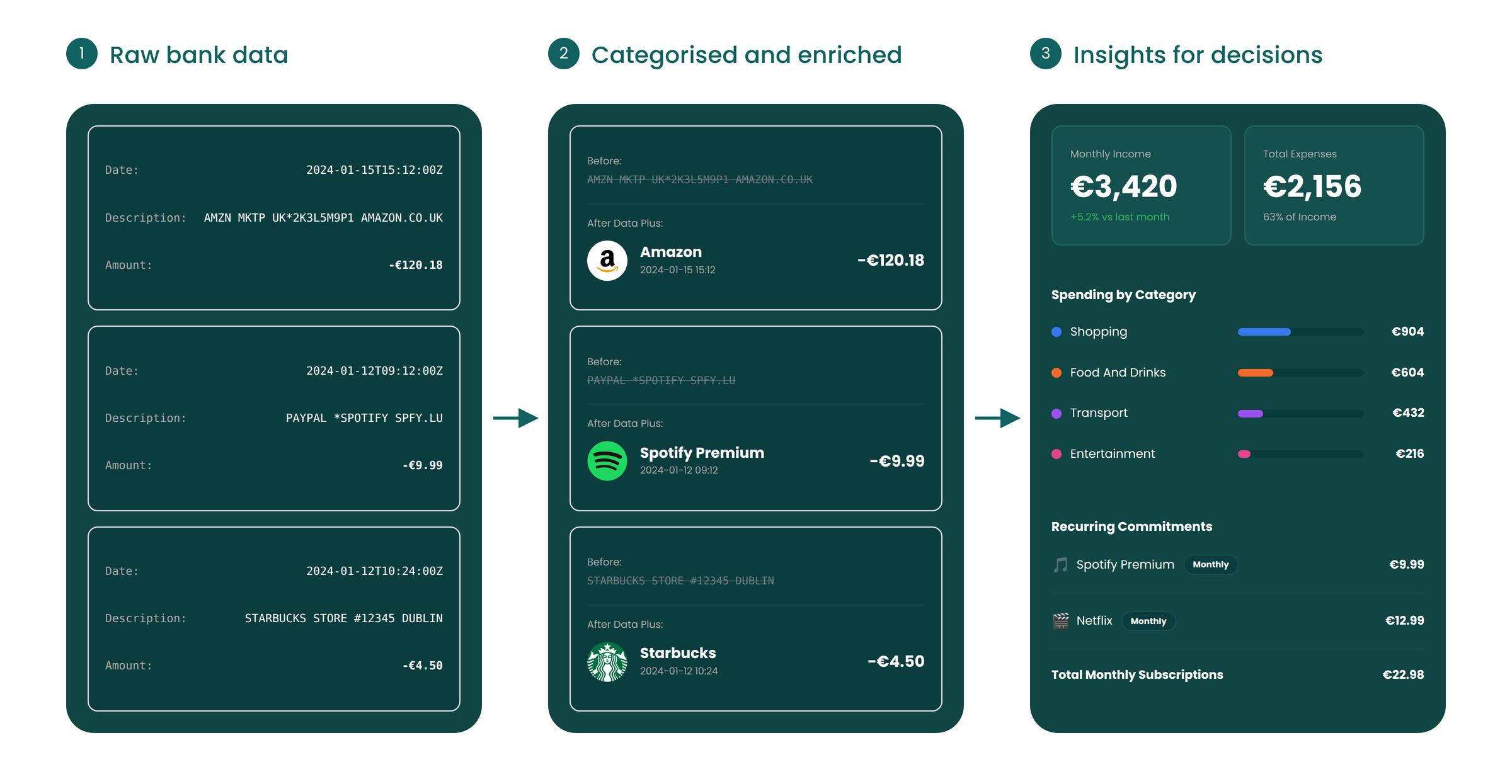 Figure 2: From raw bank data to financial insights.
Together, those signals give a business a much fuller picture of someone's financial position than a stand-alone balance or a single transaction can.
What sets this data apart is where it comes from. Because it is shared with consent directly from the customer's bank account, it is:
Real-time, reflecting the account as it stands at the moment it is accessed.
Accurate, because it comes straight from the account provider, with no self-reported figures or uploaded statements that may be out of date.
Comprehensive, covering every transaction on the account instead of the slice of spending a single payment method can see.
A lender, an accounting platform, or a bank working from that data can see how money actually moves through an account, and that is the basis for better decisions.
The evidence for this is growing:
Experian has found that cash flow attributes built from categorised transaction data can improve predictive accuracy by up to 20%.
In UK lending, ClearScore's D•One reports that its lenders see 70% fewer defaults than expected, and HEY Credit Union now approves around 90% of marginal applications that bureau data alone could not decide, according to Open Banking Limited.
Yonder, which uses Yapily's data to assess applicants on their income and spending without needing a UK credit score, has seen 23% of its customers access credit for the first time.
This context is even more important when agents get involved. Before it acts on someone's behalf, an agent needs to know whether they can afford something, when they are paid, and what they have already committed to. Financial insights supply that context, and programmable payments supply the bounded permission to act on it: one gives the agent what it needs to decide, and the other lets it act within limits the customer has set. As agents begin to operate at scale, the accuracy of the insights they start from will shape the quality of every decision they make.
What programmable payments and financial insights make possible when brought together
Each capability is useful on its own, but the larger opportunity comes from using them together. How that works in practice depends on the use case, but it can be applied across several industries and usually follows a similar loop:
A financial insight informs a decision, whether that decision is made by a person, a rule, or an agent.
The decision triggers a programmable payment within the limits the payer has set.
That payment becomes new account data, which feeds the next insight.
That insight can then inform future decisions.
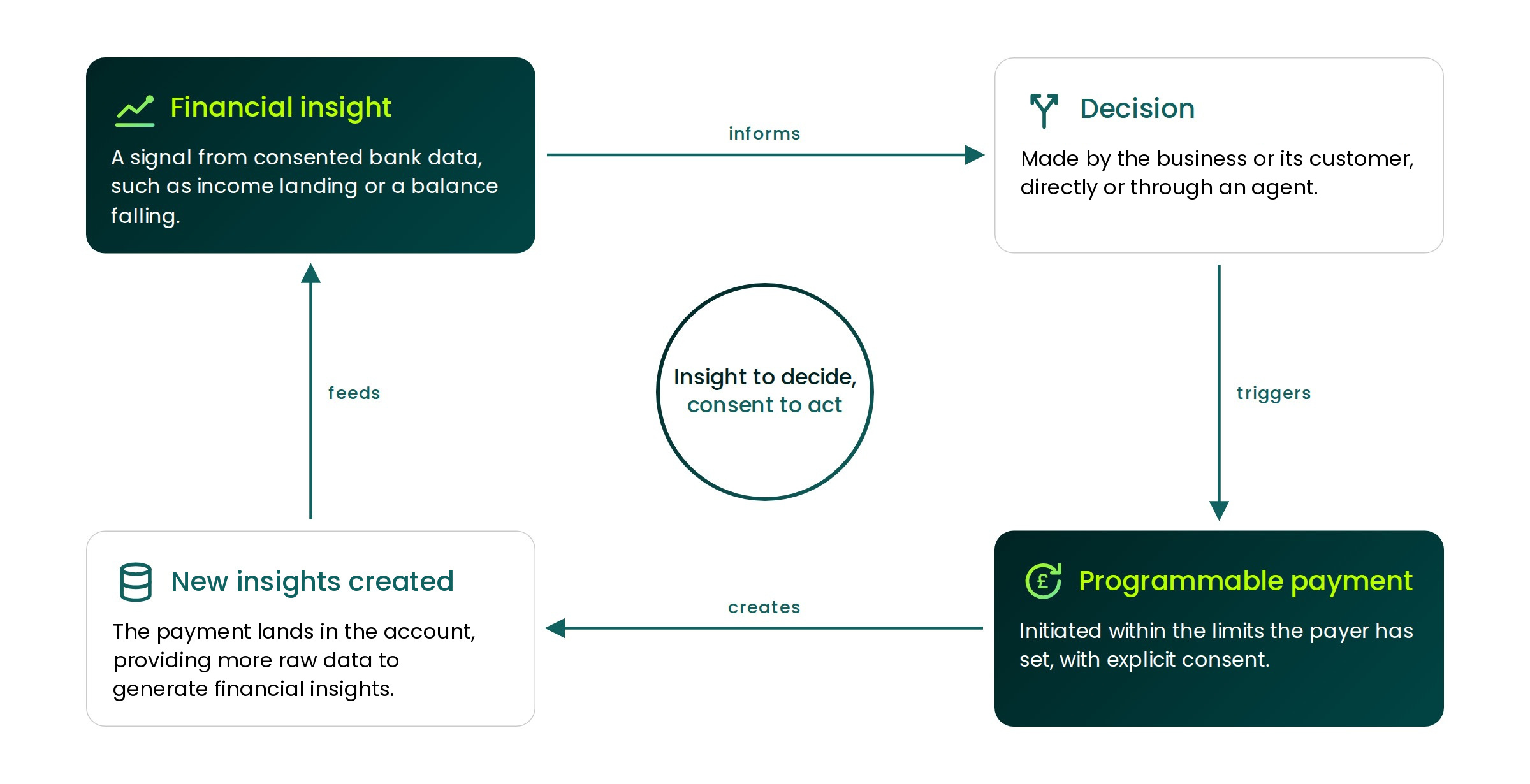 Figure 3: How programmable payments and financial insights can work together.
The building blocks for agentic finance
Agents need these exact capabilities to build agentic financial experiences. As agents increasingly act as customers, they will increase demand for programmable financial infrastructure and for products that adapt automatically to changing needs.
User experience has always been designed for a person in front of a screen, but as agents start transacting on people's behalf, they need something else: structured data, a clear record of what they draw on, and a system that acts on rules instead of waiting for a person to confirm. That means designing for the agent experience as well as the customer experience.
Yapily started as an infrastructure provider, and agent experience is now at the core of how we build our products, from onboarding and integration to scalable, resilient APIs. We are now creating the building blocks for agentic finance, and several are already live:
Consent an agent can act within: Yapily already supports cVRP in the UK, the mandate structure that lets payments run within limits the customer sets. As a founding member and shareholder of UKPI, the industry body that operates the scheme, we have direct input into how it develops as it expands beyond Wave 1.
Context an agent can decide from: Data Plus already categorises and enriches transactions across more than 190 categories for consumer and business accounts, using models trained on more than 100 million unique merchants, and we keep improving the models behind it.
Documentation an agent can integrate with: Yapily Docs is already built for developer teams working with coding agents, available as plain text and as an installable Agent Skill, and we are building towards a platform that is AI-native from onboarding through to integration.
Alongside the building blocks for agents, we're continuing to build on the strong foundation we've already established:
Payments and data in one integration: Payments and data run through the same integration across the UK and Europe, so the data that informs a decision and the payment that acts on it come from the same source, under the same consent model.
Business account coverage: Alongside consumer accounts, we connect to SME and corporate accounts, which means B2B products such as business lending, spend management, and invoice payments can use both capabilities as well.
Enterprise-ready: As more automated traffic runs through the platform, it has to hold up, which is why it is designed for resilience and high availability, with 99.97% uptime.
From open banking to open finance
Open banking covers payment accounts, and open finance extends the same consent-based model to the rest of a person's or business's financial life, including savings, investments, pensions, mortgages, insurance, and credit. In the UK, the FCA's open finance roadmap, published in April 2026, sets out a path to 2030 that starts with lending to SMEs and consumers' access to mortgages, before scaling up from 2028. In the EU, the proposed Financial Data Access regulation (FiDA) would extend data sharing in a similar way, although its timeline is currently uncertain, with no further negotiating sessions scheduled.
Open finance would widen the scope of both capabilities:
Financial insights could draw on a person's or business's whole financial position, so an affordability check for a mortgage or an SME loan could take account of savings, pension contributions, and existing credit alongside the current account.
Programmable payments could extend to regular contributions, overpayments, and moving money between products within rules the customer sets.
Some of the groundwork is already in place, since wealth and investment contributions are among the use cases cVRP supports today.
AI is also adding to the demand for this shift, because an agent or AI tool is only as useful as the picture it works from, and people's expectations of what AI can do with their finances are rising as the technology improves. The FCA's own TechSprints on SME finance and mortgages, run as part of the roadmap, included affordability assessment tools that use AI. Each new sector that opens up adds another source of consented data for financial insights and another route for programmable payments, and each one is likely to widen what agents can do with both.
Building towards a world without financial friction
Programmable payments and financial insights are capabilities built on open banking connectivity, and they will form the foundation of the next wave of financial products. As cVRP widens beyond its first wave and consent models develop for agents, more of what businesses build will run on rules their customers have set and on decisions grounded in an accurate view of their finances. Open finance will expand both capabilities further into a person's financial life, and agentic finance will accelerate that.
This is a real step towards a world without financial friction, where money and data move securely, instantly, and without barriers or inefficiencies, and where products are built for humans, but increasingly run by agents.
If you are exploring how programmable payments and financial insights could work in your product, talk to a payments expert.